
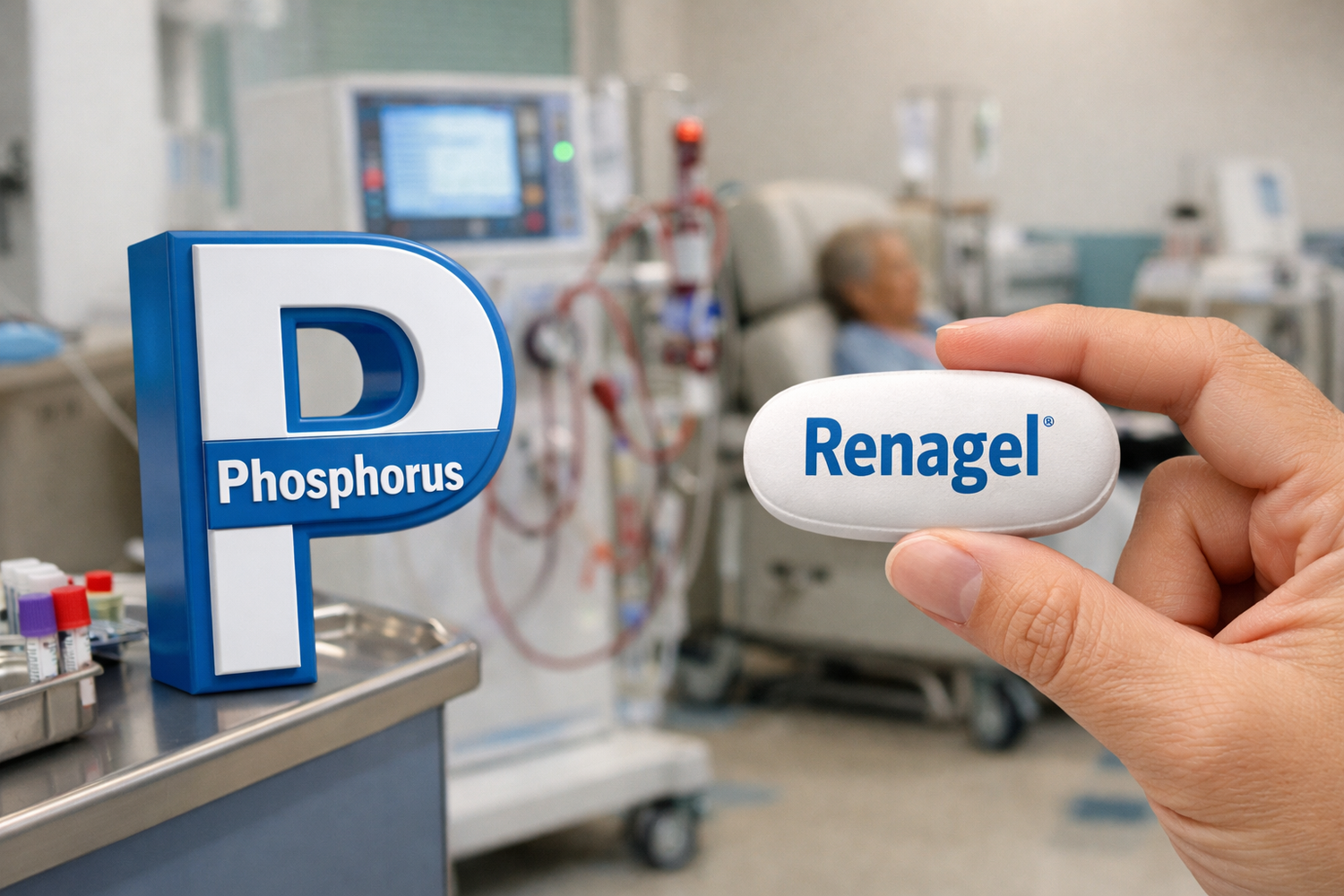
What is phosphorus?
Phosphorus is a mineral found in many foods like dairy, meat, beans, nuts, and processed foods. Your body needs it to help build strong bones and teeth and to keep your muscles and nerves working properly.
Why is phosphorus a problem for dialysis patients?
Healthy kidneys remove extra phosphorus from the blood. But when your kidneys are not working well, phosphorus can build up in your body.
Too much phosphorus can:
- Weaken your bones
- Cause itching
- Lead to calcium deposits in your blood vessels and organs
- Increase the risk of heart problems
Dialysis helps remove some phosphorus, but it’s usually not enough on its own.
What are phosphate binders?
Phosphate binders are medications that help control phosphorus levels. They work by binding (attaching) to the phosphorus in your food while it’s in your stomach.
This keeps phosphorus from being absorbed into your bloodstream, so it can pass out of your body instead.
Why should you take phosphate binders with meals (especially your main meal)?
Phosphate binders only work when they are taken with food.
- When you eat, phosphorus enters your body
- Taking the binder at the same time allows it to “catch” the phosphorus
- If you take it too early or too late, it won’t work as well
Your main meal usually has the most phosphorus, so it’s especially important to take your binder then.
Taking your binders is a small step that makes a big difference in your health
Simple reminder:
👉 “No binder = more phosphorus stays in your body.”
👉 “Take your binder with your first bite of food.”

0 comments