
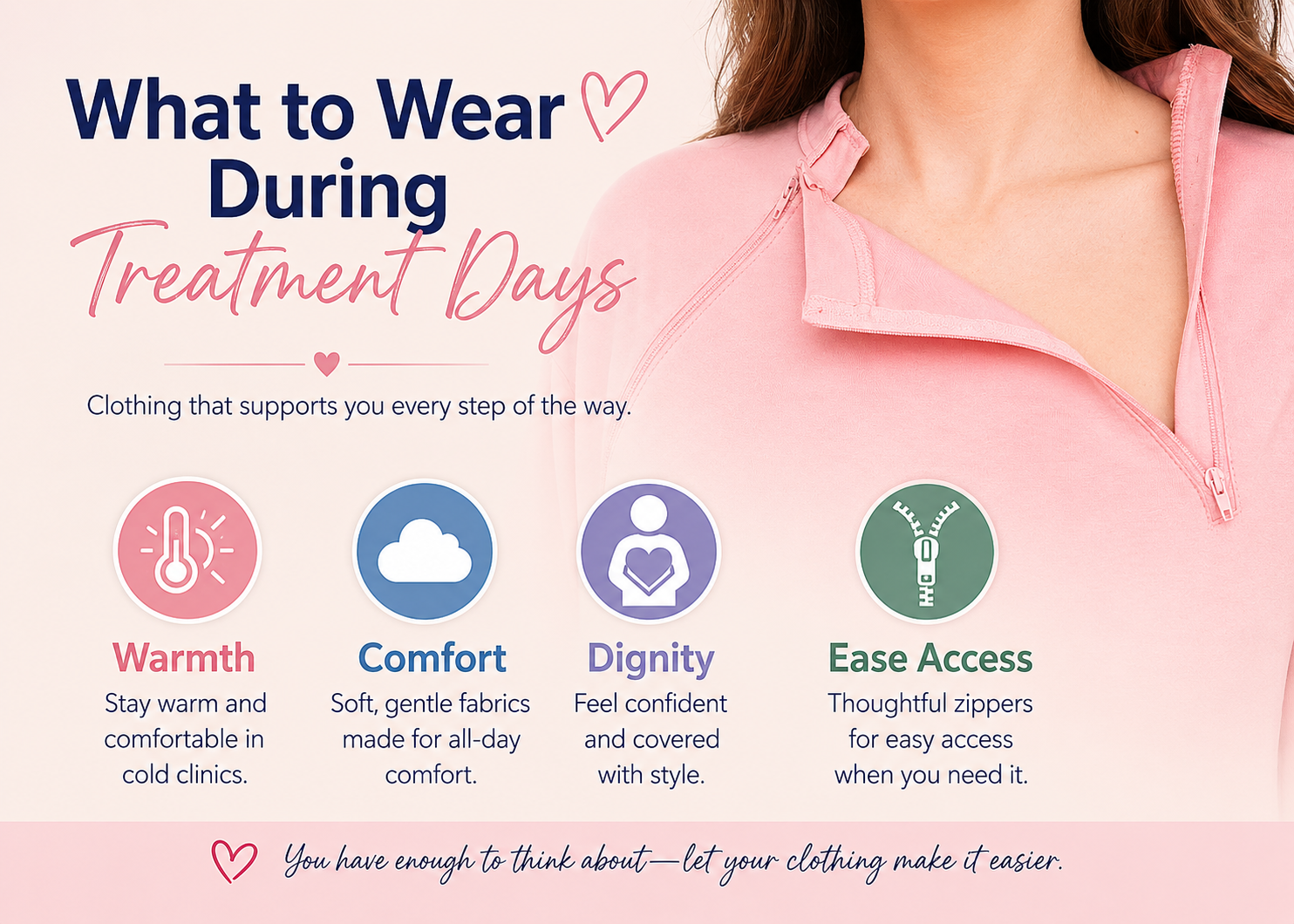
Whether you're receiving dialysis, chemotherapy, or infusion therapy, treatment days can be physically and emotionally demanding. While many people focus on medications and appointments, one simple thing that can make a significant difference is what you wear.
The right clothing can help you stay warm, comfortable, and prepared for treatment while making it easier for your healthcare team to provide care. Adaptive treatment wear is thoughtfully designed with both patients and medical professionals in mind, helping every treatment session feel a little easier.
Why Regular Clothing Can Be Challenging During Treatment
Traditional sweatshirts, jackets, and long-sleeve shirts weren't designed for medical treatments. Patients often find themselves having to:
-
Pull sleeves up that are too tight to expose a fistula or graft.
-
Remove an entire sweatshirt because of a chest port or catheter.
-
Stretch or awkwardly pull clothing aside for blood pressure checks.
-
Feel cold for hours after taking layers off during treatment.
These small inconveniences happen treatment after treatment, adding unnecessary discomfort to an already long day.
Stay Warm Throughout Your Treatment
Dialysis centers, infusion clinics, and chemotherapy suites are often kept cool. During treatment, many patients become even more sensitive to the cold.
Wearing adaptive clothing made from thick, soft, and insulating materials helps maintain body warmth throughout your session. Instead of removing your sweatshirt or jacket to access your treatment site, you simply open the designated access zipper while keeping the rest of your body comfortably covered.
Staying warm can help patients feel more relaxed, making long treatment sessions more comfortable.
Easy Arm Access for Dialysis, PICC Lines, and Blood Draws
One of the biggest advantages of adaptive clothing is strategically placed arm openings.
Specially designed arm zippers allow healthcare professionals to quickly access:
-
AV fistulas
-
AV grafts
-
PICC lines
-
IV access sites
-
Blood draw locations
Instead of struggling to roll up tight sleeves or removing clothing completely, patients simply unzip the access opening exactly where it's needed.
This saves time while reducing unnecessary movement and discomfort.
Built-In Access for Accurate Blood Pressure Monitoring
Many adaptive garments feature access openings on both sleeves.
While one sleeve provides easy access to a fistula, graft, or PICC line, the opposite sleeve allows nurses to place a blood pressure cuff directly on the upper arm without bunching thick fabric underneath.
This offers several advantages:
-
More accurate blood pressure readings
-
Faster assessments
-
Greater patient comfort
-
Less interruption during treatment
For dialysis patients especially, having one arm available for treatment and the other easily accessible for blood pressure monitoring creates a smoother experience throughout the session.
Chest Access Without Removing Your Clothing
Patients with chest ports, central venous catheters, or tunneled dialysis catheters often face another common challenge.
With regular clothing, accessing these devices usually means:
-
Pulling the neckline down
-
Lifting the shirt upward
-
Removing an entire hoodie or sweatshirt
-
Feeling exposed during treatment
Adaptive clothing with discreet chest zippers eliminates these problems.
Healthcare providers can simply unzip the chest opening to access:
-
Chest ports
-
Dialysis catheters
-
Central lines
-
Infusion ports
Once treatment is complete, the zipper is closed again allowing patients to remain warm, comfortable, and fully covered.
Comfort Meets Dignity
Medical treatments can already leave patients feeling vulnerable. Clothing that minimizes unnecessary exposure can make a meaningful difference.
Adaptive treatment wear allows patients to remain covered throughout most of their treatment, helping preserve privacy and dignity while still giving healthcare professionals the access they need.
Many patients appreciate not having to repeatedly remove layers or expose more of their body than necessary during every appointment.
It's a small design detail that can have a lasting impact on confidence and comfort.
Helping Healthcare Professionals Deliver Care More Efficiently
Adaptive clothing doesn't only benefit patients it also supports nurses and other healthcare professionals.
Easy-access openings allow staff to:
-
Reach treatment sites more quickly
-
Perform blood pressure checks without removing clothing
-
Access ports and catheters with less repositioning
-
Reduce interruptions during treatment
-
Improve overall workflow
Thoughtfully designed access points help make routine procedures smoother for everyone involved.
Designed for Real Treatment Days
Adaptive treatment clothing is ideal for individuals receiving:
-
Hemodialysis
-
Peritoneal dialysis appointments
-
Chemotherapy
-
Immunotherapy
-
Infusion therapy
-
Blood transfusions
-
Laboratory testing
-
PICC line care
-
Port access procedures
Whether your treatment lasts one hour or several hours, clothing designed specifically for medical access can make every visit more comfortable.
More Than Clothing—It's Peace of Mind
The best adaptive clothing doesn't just provide warmth it provides confidence.
Knowing that your clothing is ready for treatment means less stress when arriving at the clinic. You can focus on your health instead of worrying about removing layers or exposing treatment sites.
At MandMcares, our adaptive treatment wear was created by nurses who understand what patients experience during dialysis, chemotherapy, and infusion treatments. Every zipper, opening, and fabric choice is thoughtfully designed to provide warmth, comfort, easy medical access, and dignity while also making treatment more efficient for healthcare professionals.
Make Every Treatment Day More Comfortable
Treatment days are challenging enough. The clothing you wear shouldn't add to that challenge.
Choosing adaptive treatment wear means staying warm, maintaining your privacy, and giving your care team quick access exactly where it's needed. It's a simple change that can make every treatment session feel a little easier for both patients and the healthcare professionals who care for them.
Because comfort matters. Dignity matters. And thoughtful design can make all the difference.

0 comments