
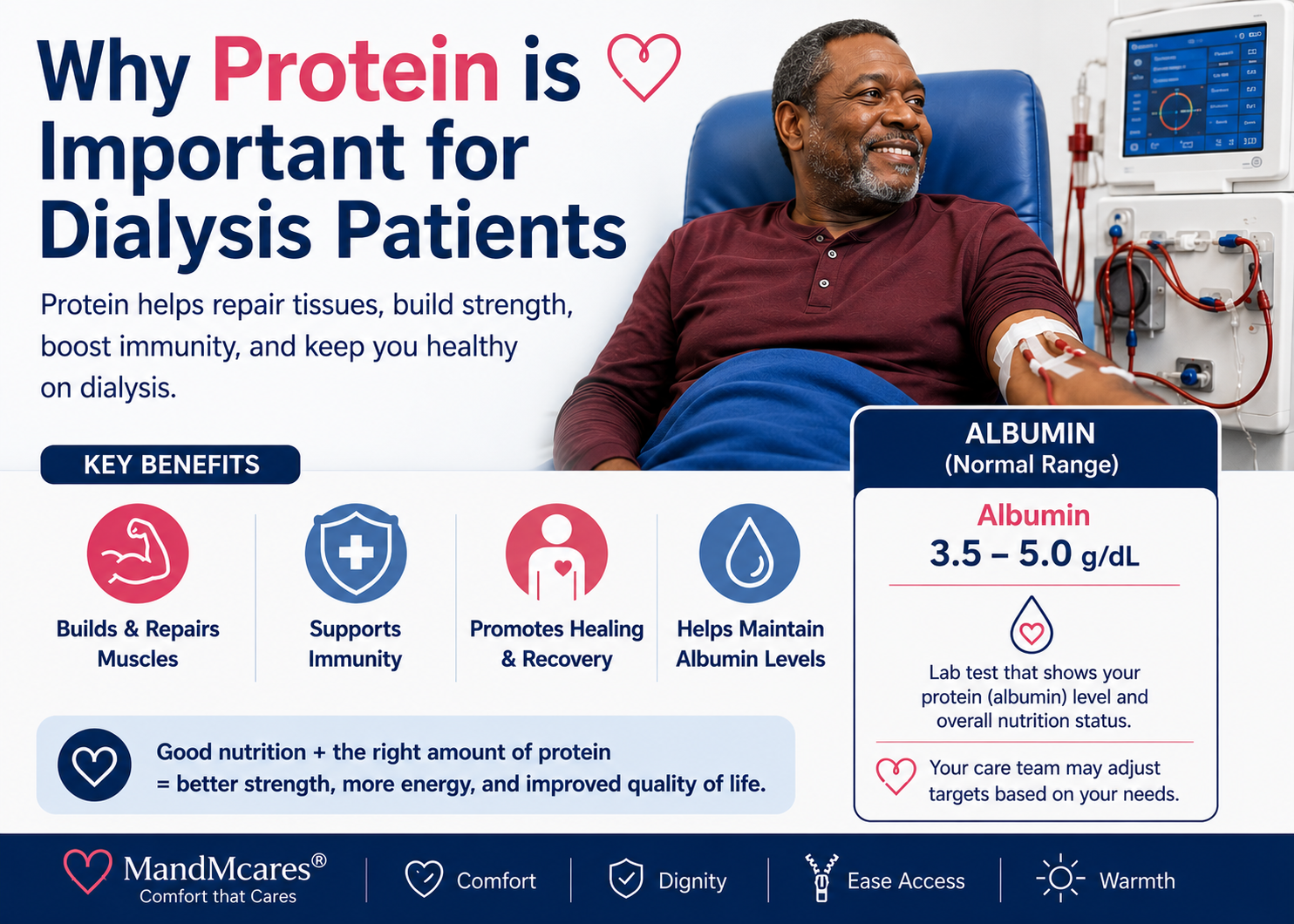
If you're on dialysis, you've probably heard your healthcare team talk about protein and albumin during your monthly lab review. Protein plays a vital role in maintaining your health, and because dialysis removes some protein from your body, getting enough each day is essential.
In this article, we'll explain why protein is important, which type of dialysis removes the most protein, what your albumin level means, and when a protein supplement may be helpful.
Why Is Protein So Important for Dialysis Patients?
Protein is one of the body's essential building blocks. It helps:
-
Build and maintain muscle
-
Repair body tissues and wounds
-
Support a healthy immune system
-
Produce hormones and enzymes
-
Maintain healthy skin and organs
-
Promote healing after illness or surgery
Because dialysis removes protein from the body, dialysis patients usually need more protein than people with healthy kidneys.
Without enough protein, you may experience:
-
Muscle weakness
-
Fatigue
-
Poor appetite
-
Slow wound healing
-
Increased risk of infection
-
Weight loss
-
Low albumin levels
-
Protein-energy malnutrition
Why Does Dialysis Remove Protein?
Dialysis removes waste products and excess fluid from the blood, but it also removes small amounts of protein and amino acids.
These protein losses occur regularly, making it important to replace them through a kidney-friendly, high-protein diet or, if recommended by your healthcare provider, a protein supplement.
Which Type of Dialysis Removes More Protein?
Hemodialysis (HD)
During hemodialysis, blood passes through a dialysis filter that removes waste products and excess fluid. Along with these wastes, a small amount of protein is also lost.
On average, hemodialysis patients lose approximately:
-
6–12 grams of protein during each treatment
Since most patients receive hemodialysis three times a week, these protein losses can accumulate over time.
Peritoneal Dialysis (PD)
Peritoneal dialysis removes more protein than hemodialysis because the dialysis solution remains inside the abdomen for several hours and continuously draws protein across the peritoneal membrane.
Many PD patients lose approximately:
-
5–15 grams of protein every day
Protein losses may increase even further during episodes of peritonitis (infection of the peritoneum).
Because protein is lost daily, peritoneal dialysis patients often require more dietary protein than patients receiving hemodialysis.
What Is Albumin?
Albumin is the most common protein measured during your monthly dialysis blood work. It is made by the liver and plays an important role in:
-
Maintaining fluid balance
-
Carrying hormones and nutrients throughout the body
-
Supporting tissue repair
-
Helping fight illness
Low albumin levels may indicate:
-
Not eating enough protein
-
Poor nutritional status
-
Inflammation
-
Infection
-
Chronic illness
What Is a Normal Albumin Level?
For most adults in the United States, the normal serum albumin range is:
3.5–5.0 g/dL (grams per deciliter)
For many dialysis patients, healthcare providers generally aim for an albumin level of:
✅ 4.0 g/dL or higher, whenever possible.
A higher albumin level is generally associated with better nutritional status and overall health. However, albumin is affected by more than just diet. Inflammation, infection, liver disease, and fluid status can also influence your albumin level, so your healthcare team will evaluate it alongside your other lab results.
How Much Protein Do Dialysis Patients Need?
Protein needs vary depending on your body weight, dialysis type, and overall health.
General recommendations are:
Hemodialysis (HD)
Approximately:
1.2 grams of protein per kilogram of body weight each day
Peritoneal Dialysis (PD)
Approximately:
1.2–1.3 grams of protein per kilogram of body weight each day
Since PD patients lose protein every day, they often require slightly more protein than HD patients.
Example:
A person weighing 70 kg (154 lbs) may need approximately:
-
84–91 grams of protein per day
Your nephrologist or renal dietitian can determine the right amount for your individual needs.
Should Dialysis Patients Take Protein Supplements?
Not every dialysis patient needs a protein supplement.
Many people can meet their protein needs by eating enough high-quality protein foods. However, your nephrologist or renal dietitian may recommend a protein supplement if you:
-
Have low albumin levels
-
Are losing weight unintentionally
-
Have poor appetite
-
Are recovering from illness or surgery
-
Cannot meet your protein needs through food alone
Always speak with your healthcare provider before starting a protein supplement. Some products may contain high levels of potassium, phosphorus, sodium, or other ingredients that may not be appropriate for people with kidney disease.
High-Quality Protein Sources
Kidney-friendly protein sources may include:
-
Eggs or egg whites
-
Chicken
-
Turkey
-
Fish
-
Lean beef
-
Pork
-
Greek yogurt (if appropriate)
-
Cottage cheese (if recommended)
-
Kidney-friendly protein supplements approved by your healthcare provider
A renal dietitian can help you choose the best protein sources based on your lab results and treatment plan.
Signs You May Not Be Getting Enough Protein
Talk with your healthcare team if you notice:
-
Unintentional weight loss
-
Muscle loss or weakness
-
Poor appetite
-
Slow wound healing
-
Frequent infections
-
Low albumin levels on your monthly lab work
Early intervention can help improve your nutritional status and overall health.
The Bottom Line
Protein is essential for maintaining muscle strength, supporting the immune system, healing tissues, and staying healthy during dialysis.
While hemodialysis removes protein during each treatment, peritoneal dialysis generally removes more protein overall because protein is lost every day. Replacing these losses with enough high-quality protein can help maintain healthy albumin levels and improve your overall well-being.
If you're unsure whether you're getting enough protein or whether a protein supplement is right for you, speak with your nephrologist or renal dietitian. They can recommend the right amount of protein based on your health, lab results, and dialysis treatment.
At MandMcares
At MandMcares, we understand that every treatment day comes with unique challenges. That's why our nurse-founded adaptive treatment wear is thoughtfully designed to help dialysis, chemotherapy, and infusion patients stay warm, comfortable, and confident throughout every treatment—because caring for patients goes beyond treatment itself.
0 comments