
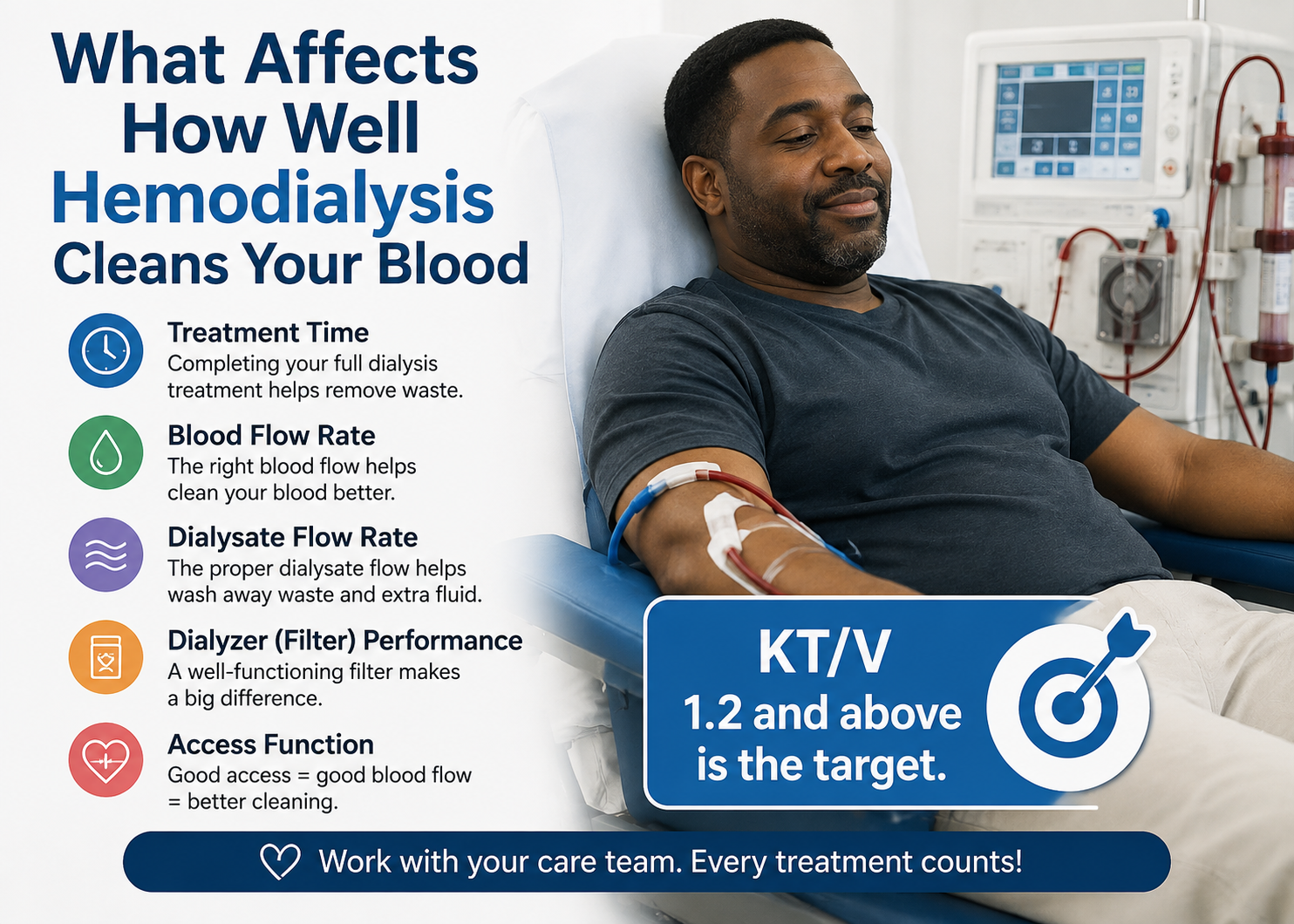
Hemodialysis helps remove waste products and excess fluid from your blood when your kidneys can no longer do enough of this work. But how well your blood is cleaned depends on several things not just the dialysis machine.
1. Blood Flow Rate
During dialysis, your blood travels from your vascular access through the dialyzer, or “artificial kidney.”
Blood flow rate is how quickly your blood moves through the dialysis machine. In general, adequate blood flow allows more blood to pass through the dialyzer during your treatment.
If your fistula, graft, or catheter isn't working properly, your blood flow may be reduced, which can affect dialysis clearance.
2. Your Dialysis Access
Your fistula, graft, or catheter is your lifeline to dialysis.
Problems such as narrowing, clotting, or poor blood flow can make it harder to deliver the prescribed dialysis treatment.
Tell your dialysis team if you notice changes such as swelling, pain, redness, bleeding, or a change in the normal “thrill” or vibration of your fistula or graft.
3. Treatment Time
The longer your blood is circulated through the dialyzer, the more opportunity there is to remove waste.
Frequently leaving dialysis early or missing treatments can reduce the amount of dialysis you receive. If something is making it difficult to complete your treatments, talk with your dialysis team they may be able to help.
4. The Dialyzer
The dialyzer is the filter that cleans your blood.
Blood flows on one side of a special membrane while dialysate flows on the other side. Waste products move from your blood into the dialysate.
Different dialyzers have different characteristics and abilities to remove certain waste products.
5. Dialysate Flow
Dialysate is the fluid contains electrolytes that flows through the dialyzer.
it helps to balance the main electrolytes in body like potassium sodium and calcium.
How Do You Know If You're Getting Enough Dialysis?
Your dialysis team uses blood tests and treatment information to measure dialysis adequacy.
Two numbers you may hear are: Target
Kt/V 1.2
A measurement used to estimate how much dialysis you're receiving.
URR 65%
Urea Reduction Ratio the percentage by which urea decreases during dialysis.
although your individual treatment goals may be different.
If your numbers change, ask your dialysis team what it means for you.
Knowledge can help you take an active role in your care.
At MandMcares, we believe comfort, dignity, and understanding all matter during treatment. Our adaptive treatment wear is designed to make access to dialysis sites easier while helping patients stay comfortable and warm during treatment.
Because treatment should be about your care not fighting with your clothing.
Medical Disclaimer
This article is for educational purposes only and does not replace advice from your nephrologist or dialysis care team. Your dialysis prescription and treatment goals are individualized. Always discuss your dialysis numbers, access, symptoms, and treatment concerns with your healthcare provider.
0 comments